Migrating My Site to AEM Edge Delivery Services in Two Prompts
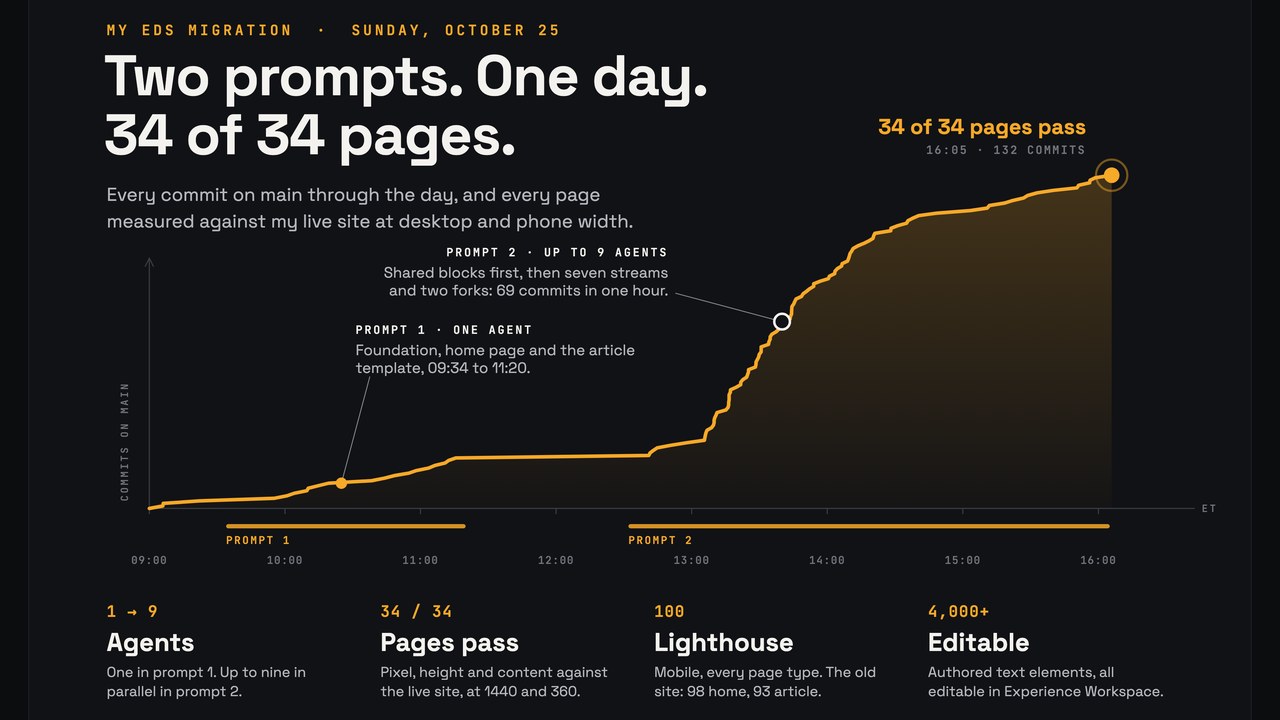
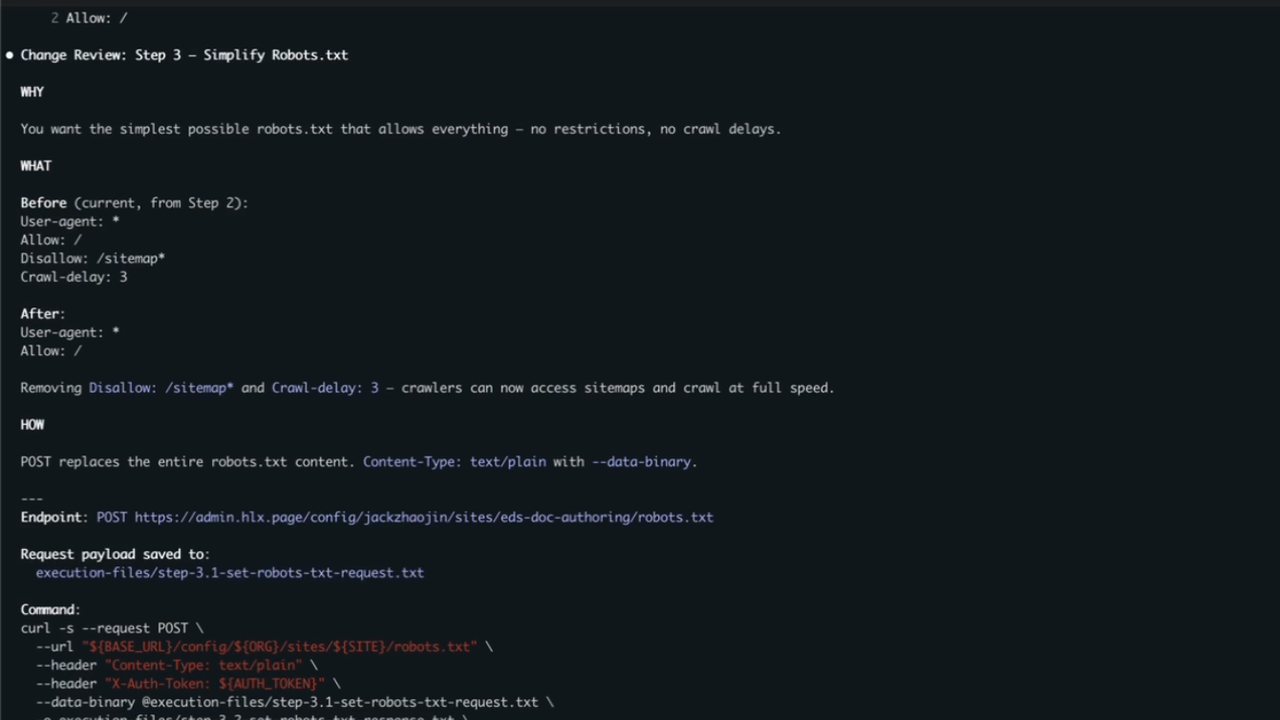
I migrated my site from GitHub Pages to AEM Edge Delivery Services with two goal prompts: 34 pages, my design system and every image, checked page by page.
Practical notes on AI engineering, Adobe Experience Manager, and working with AI.
I migrated my site from GitHub Pages to AEM Edge Delivery Services with two goal prompts: 34 pages, my design system and every image, checked page by page.
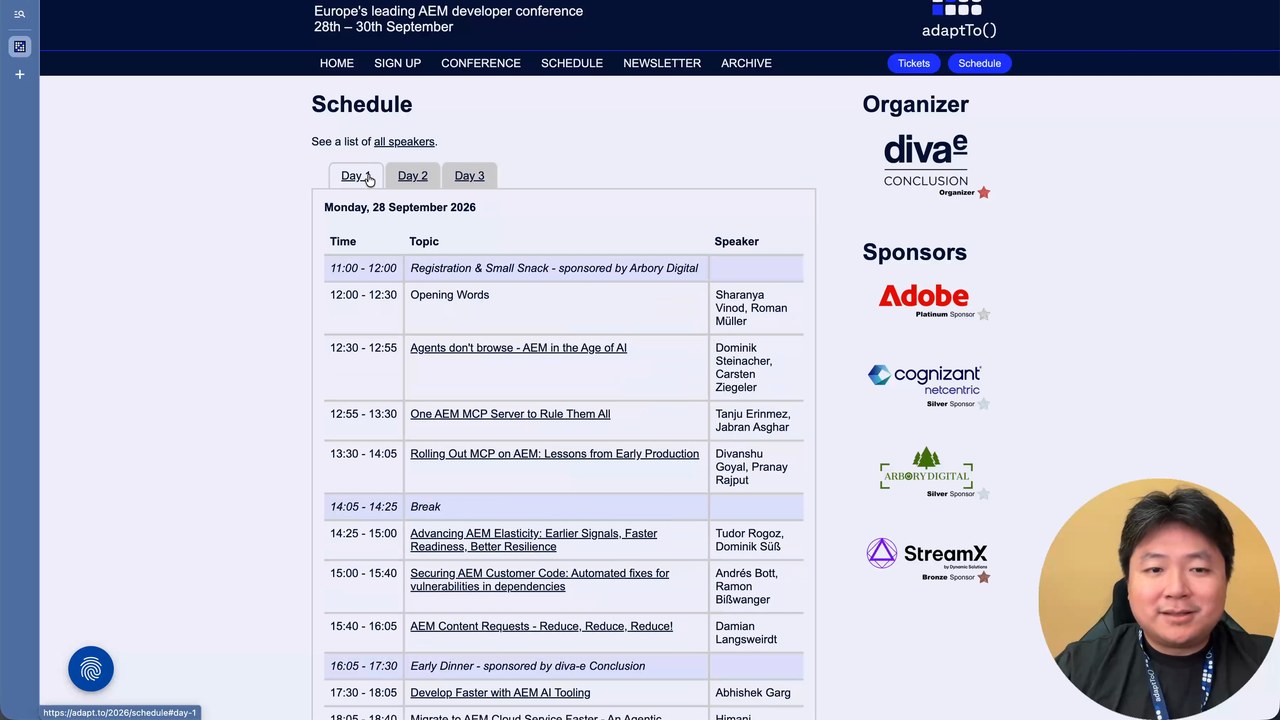
All 25 full talks from adaptTo() 2026, the AEM developer conference in Berlin, in conference order: what each one is, why to watch it, and my take.
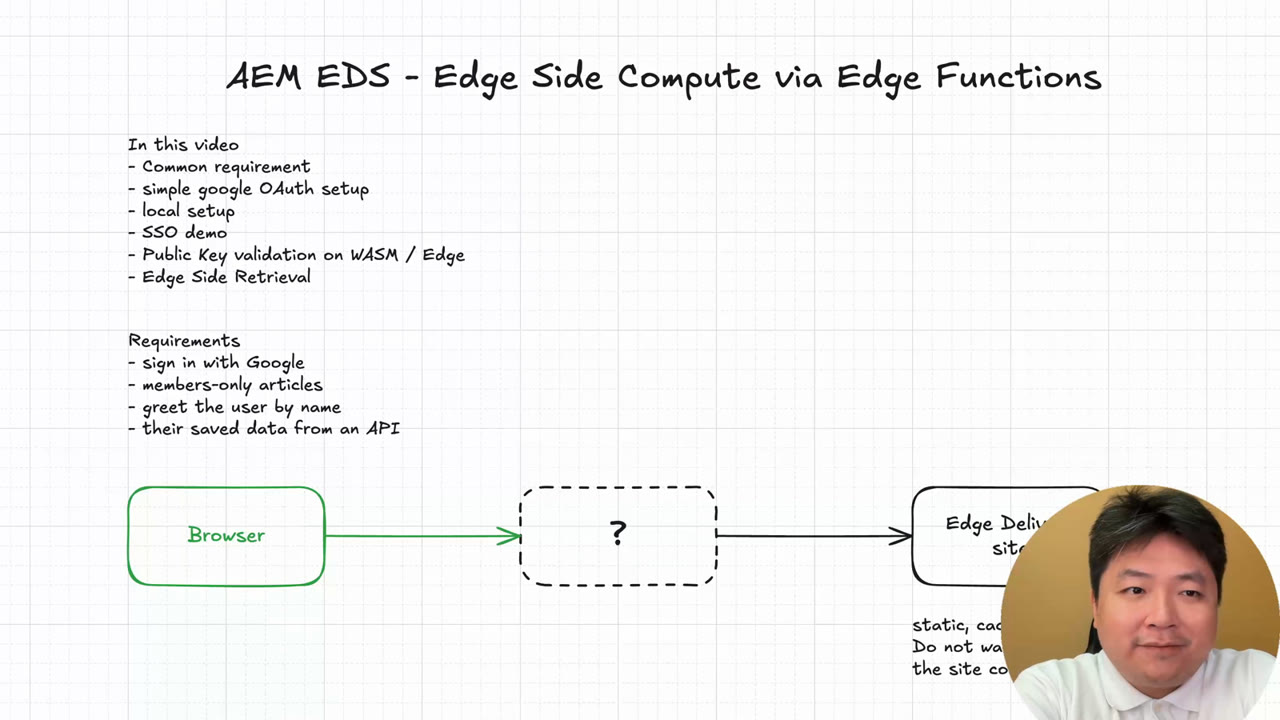
Google sign-in, a members-only section and a greeting bar with the user's own data from an API, added to an Edge Delivery site without touching the site code. The six parts of my video, written up with the code at a pinned commit and a token lab that runs the real signature checks in your browser.
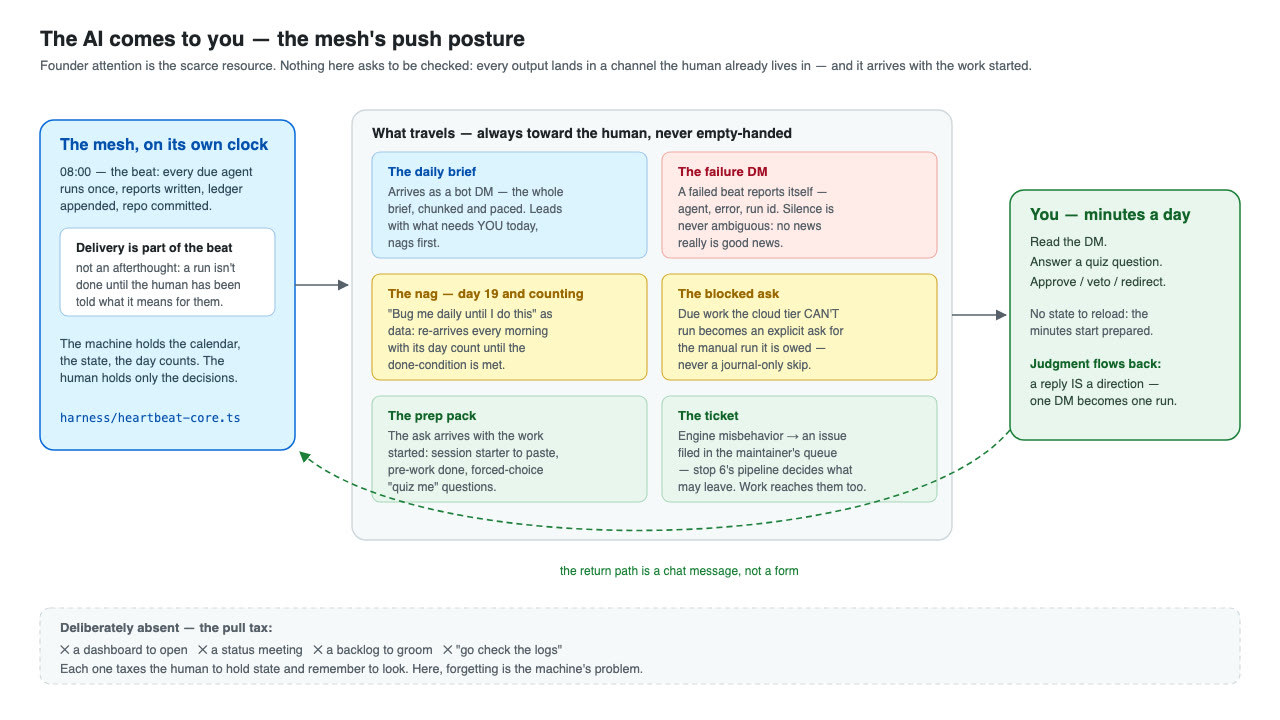
AnimaMesh, an open source engine on Cloudflare Workers: one public engine, a private markdown brain per company, agents that take sick days, a brain that files its own GitHub issues past a leak guard, and AI that reaches out to the owner instead of waiting for a prompt.
Given as a talk at AI Tinkerers Columbus, August 3, 20262nd place, AI Tinkerers global Top AI Demos
What Adobe Stardust is: a skill in adobe/skills built on impeccable, not a product. Its four steps, the human gate before EDS code, the one-shot EDS build, and three real blocks redesigned against a Google Stitch baseline.
GPT 5.6, Kimi K3, Gemini 3.5 Flash and Claude Fable 5 each built my portfolio from the same 1,032-line prompt. What each got right and wrong in my notebook, my ranking, and what the merge really kept, line by line.
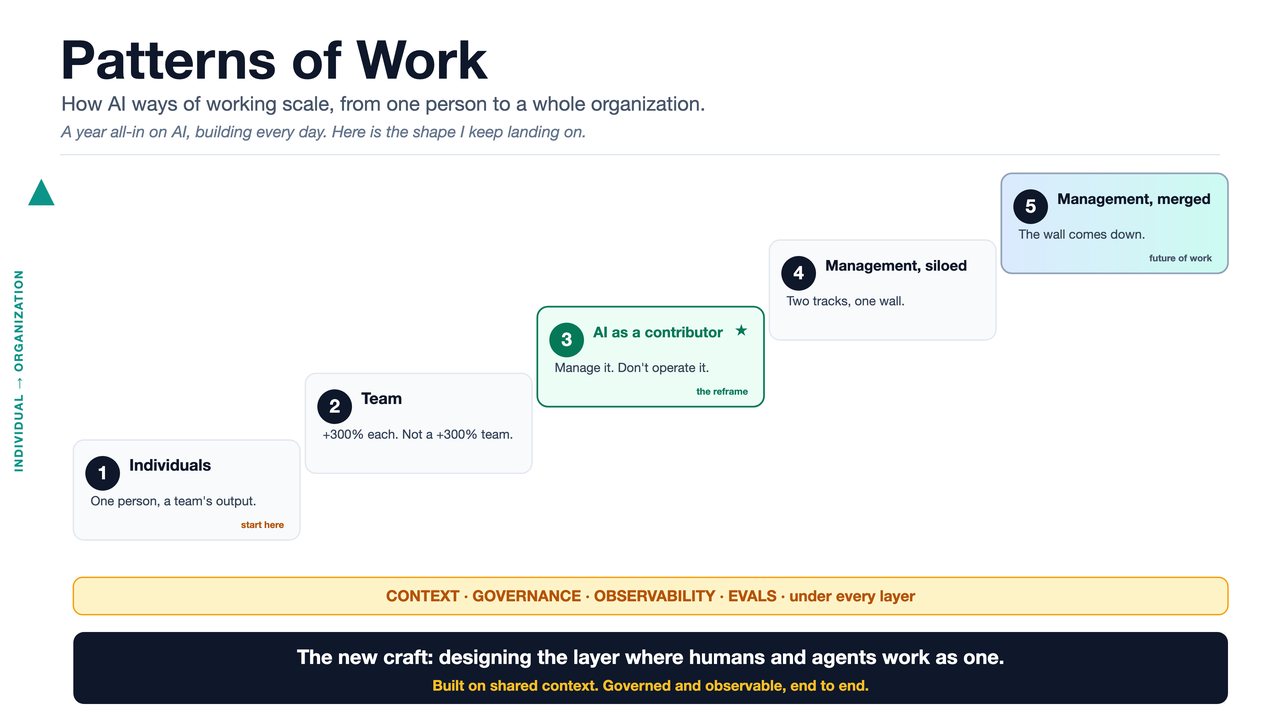
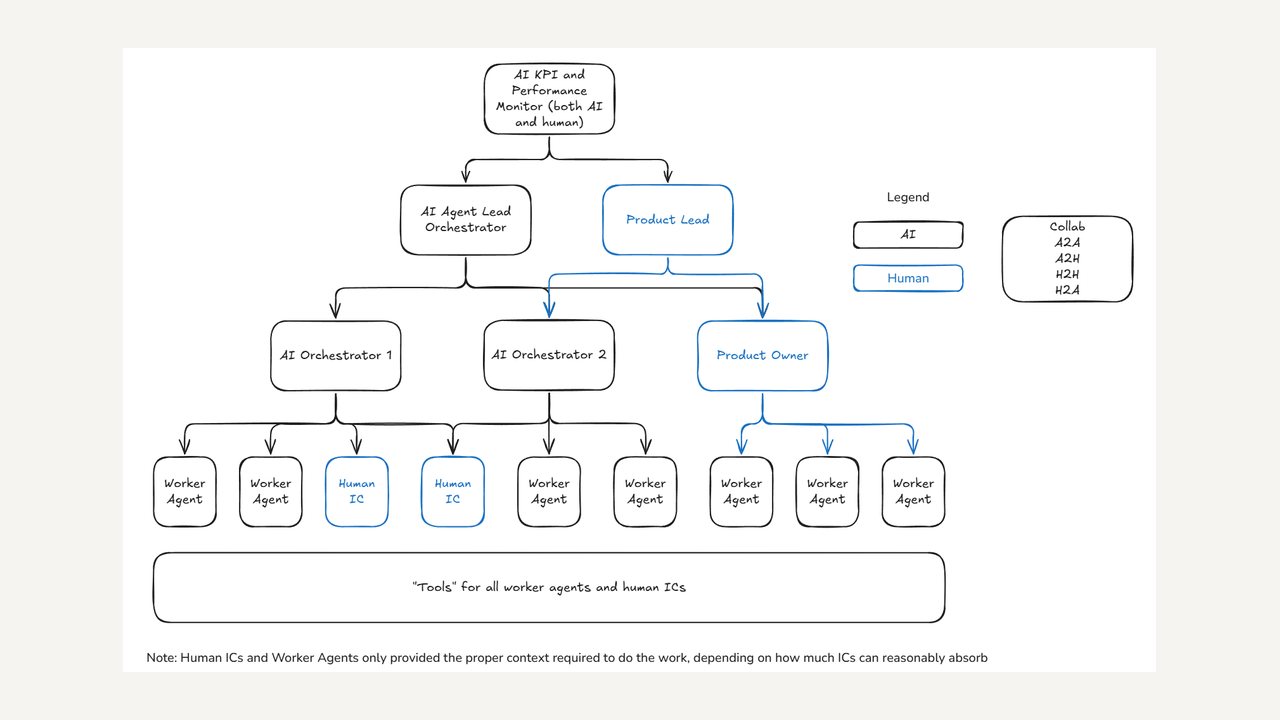
Five layers of working with AI, from one person running loops around the clock to humans and agents managing work together, plus the spine and foundation that decide whether any of it holds. Each layer covers what changes and where it gets hard, with an explorer to walk the model.
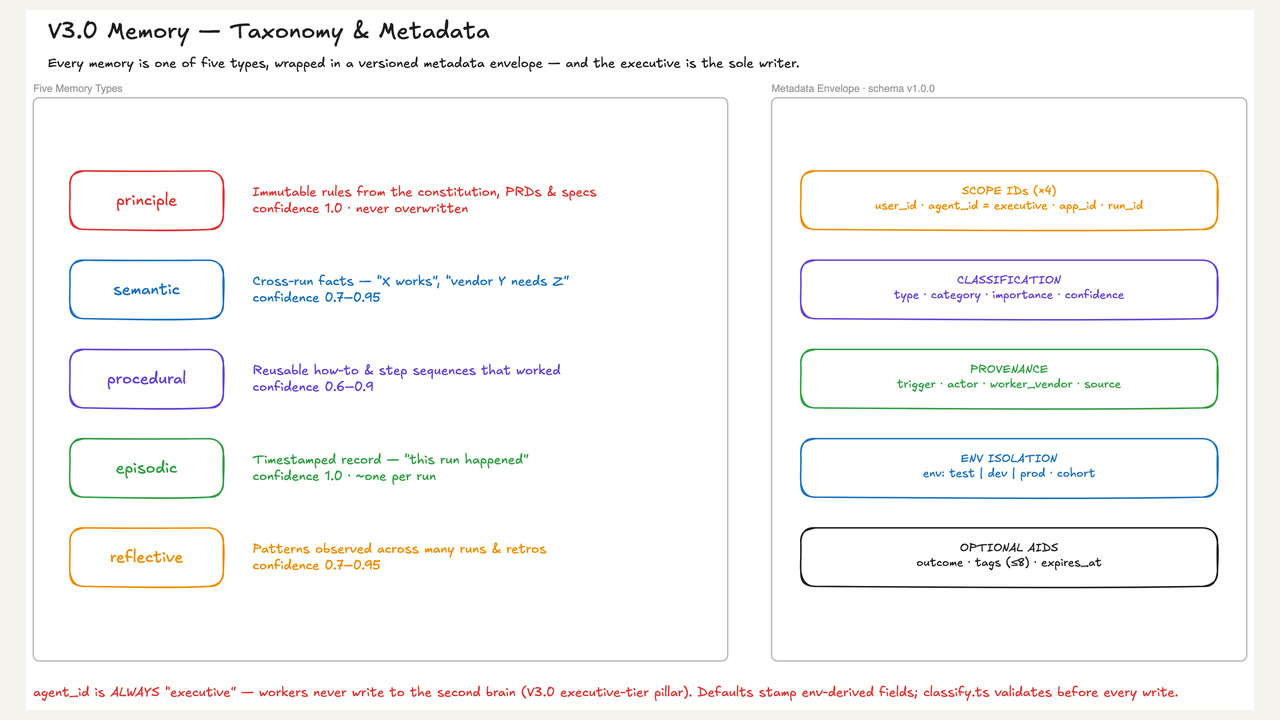
How a 24/7 coding agent gets a memory: mem0 behind the executive only, git as the source of truth, five memory types, five hooks in the loop, retrieval in plain English, and the bug that failed every write while logging ok.
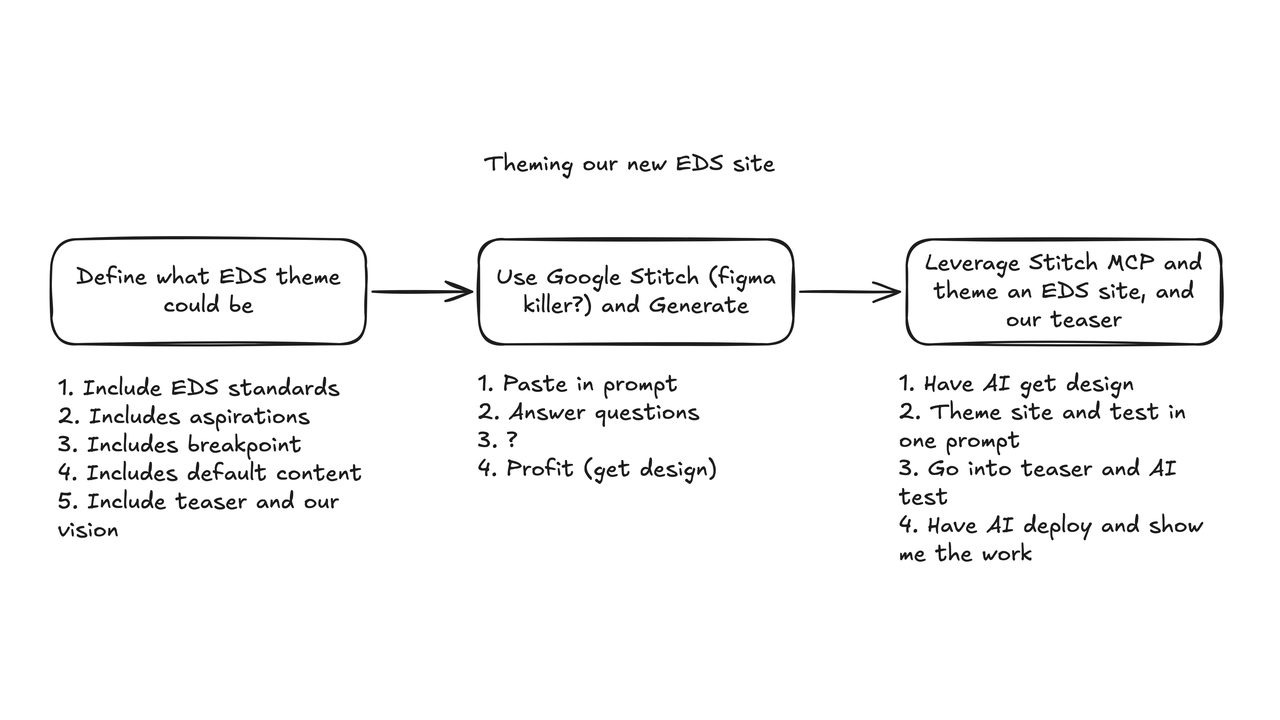
Theme a brand-new Edge Delivery site in three steps: define the theme, design it in Google Stitch, and wire it back through the Stitch MCP server, all in one long prompt. The real tokens that changed, the call-to-action miss, the fix, and why theming and blocks belong in separate passes.
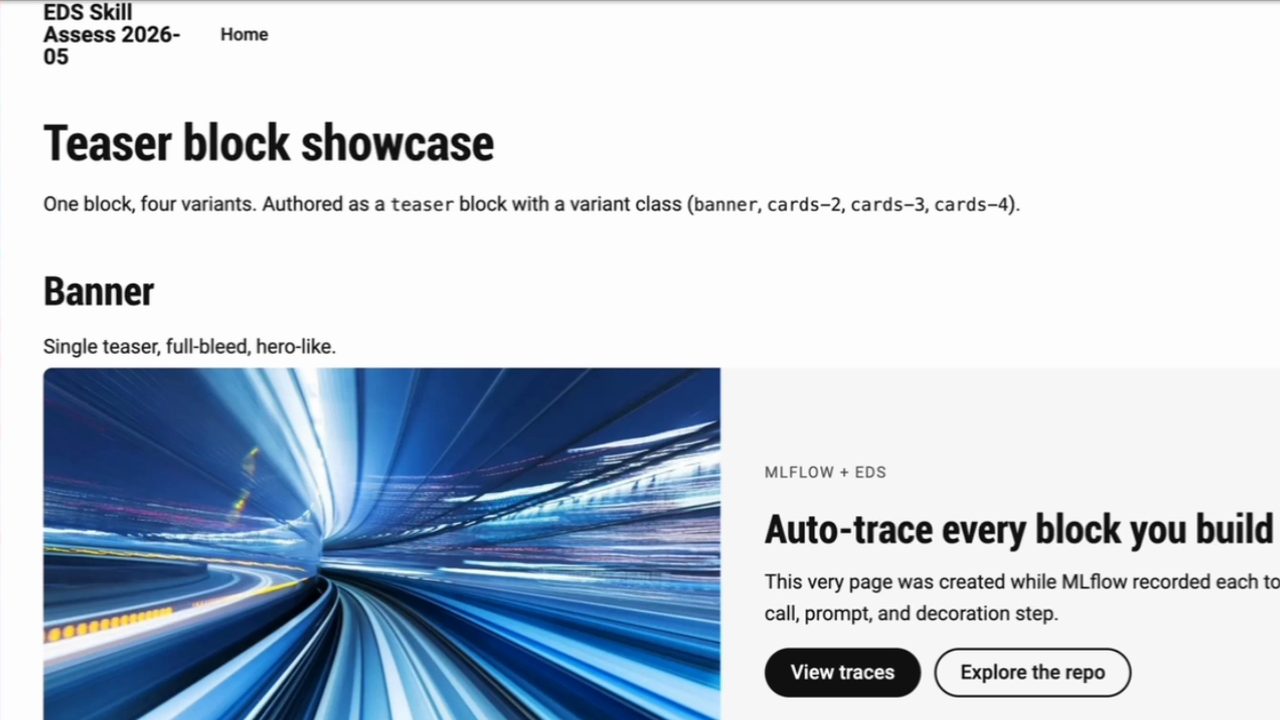
Adobe's create-site and content-driven-development skills, run end to end on a brand-new Edge Delivery site with MLflow tracing every session. What each skill does, what it built, a hook that shows which skill fired, and the theme skill that's still missing.
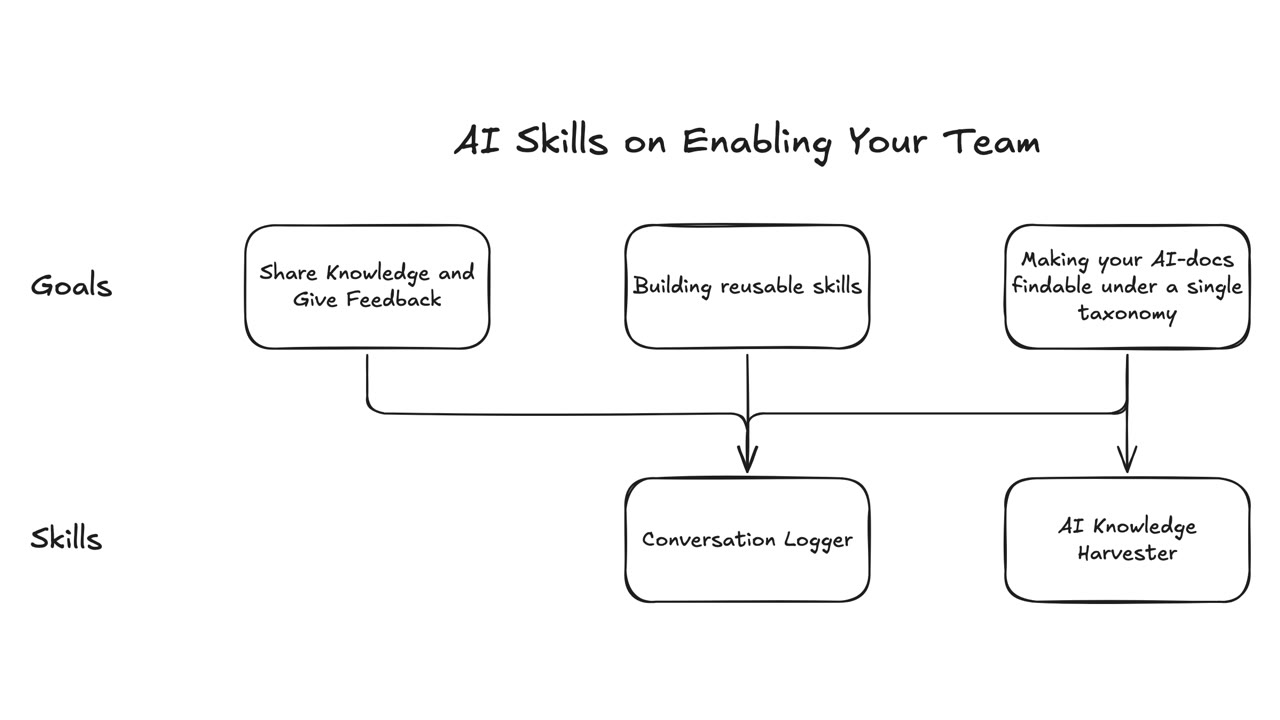
Keep the prompts people actually typed, turn one-off builds into skills, and file the AI docs behind them under one taxonomy. Two open source skills, a Conversation Logger and an AI Knowledge Harvester, and a sorter to try the filing rules.
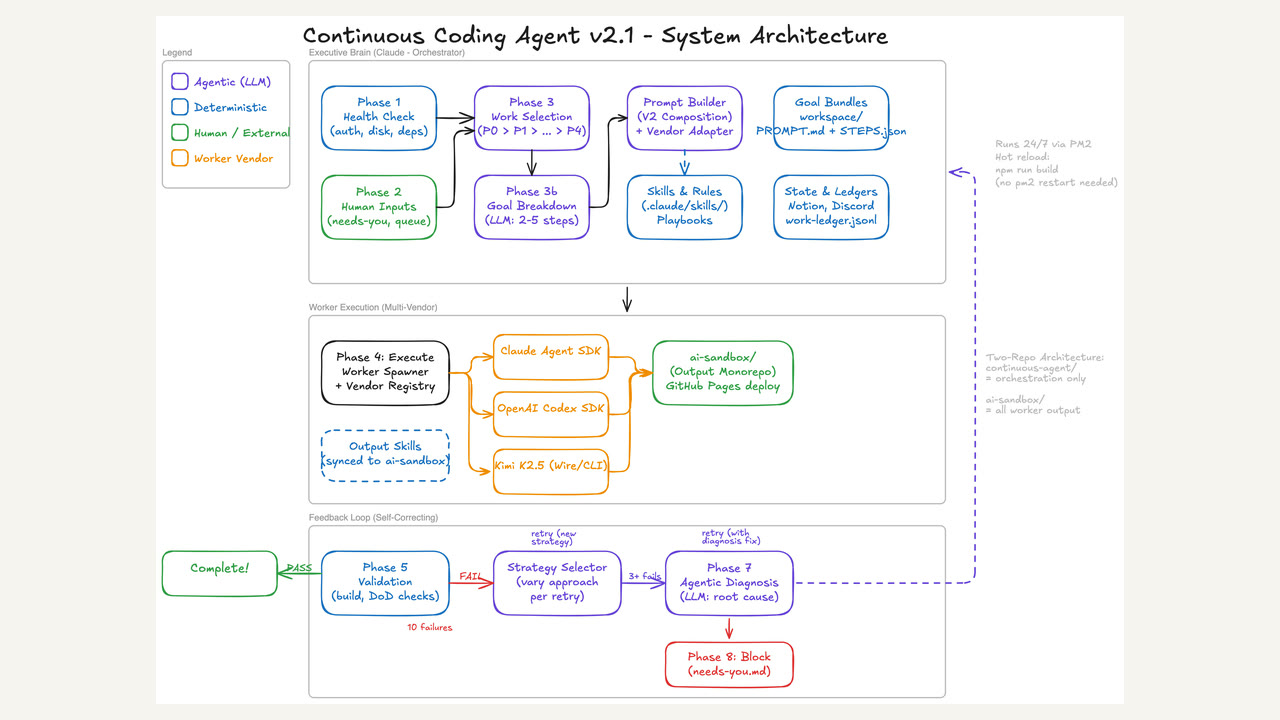
What it takes to keep a harness going around the clock: an executive loop on PM2, swappable workers on Claude, Codex and Kimi K2.5, and a failure path that retries, diagnoses, then asks a human. Release by release, with the code, the walkthrough and the live Q&A.
Given as a talk at AI Tinkerers Columbus, April 6, 2026Featured in AI Tinkerers' global Community Spotlights
Move Edge Delivery Admin API config out of Postman and into an agent skill that plans, GETs before it POSTs, and hits a Claude Code hook that stops its writes for approval. The demo, the hook's code, and a lab that shows exactly what it catches and what it misses.
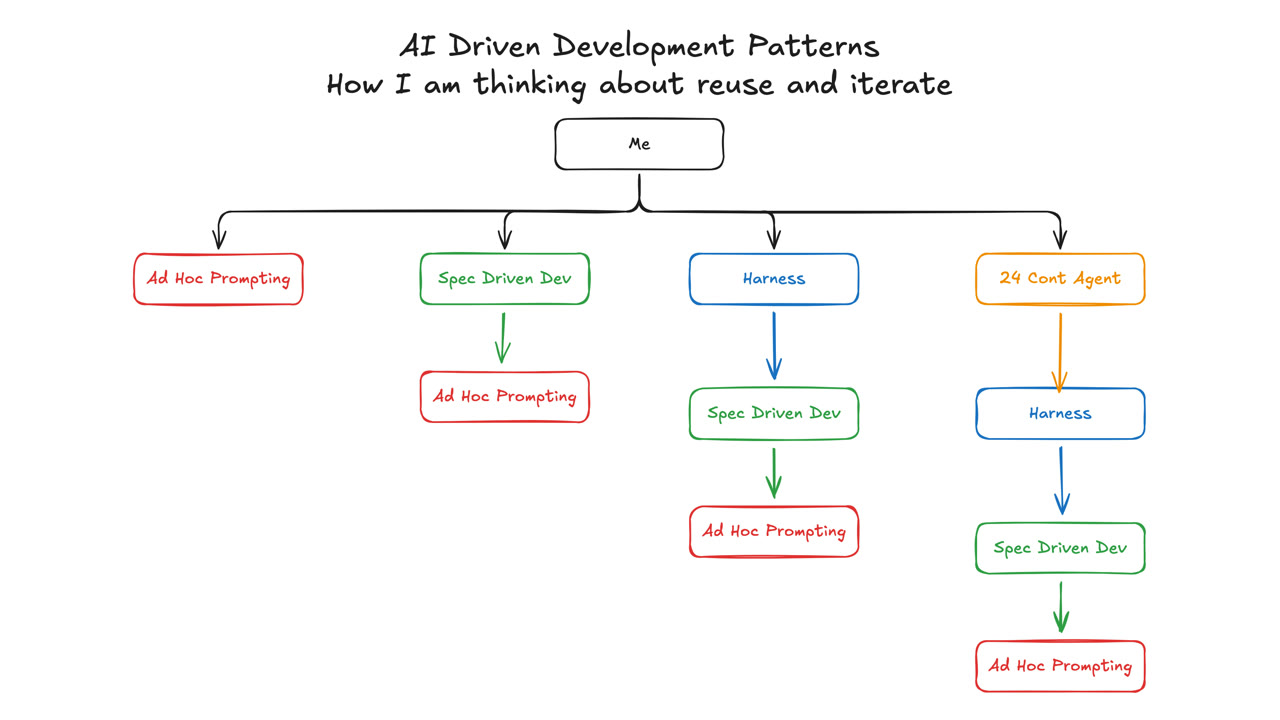
Ad hoc prompting, specs, harnesses and a 24/7 agent stack on each other, and each layer should be reused by the one above, not rebuilt. The board, a counter you can click for what rebuilding costs, and the refactor I did in April.
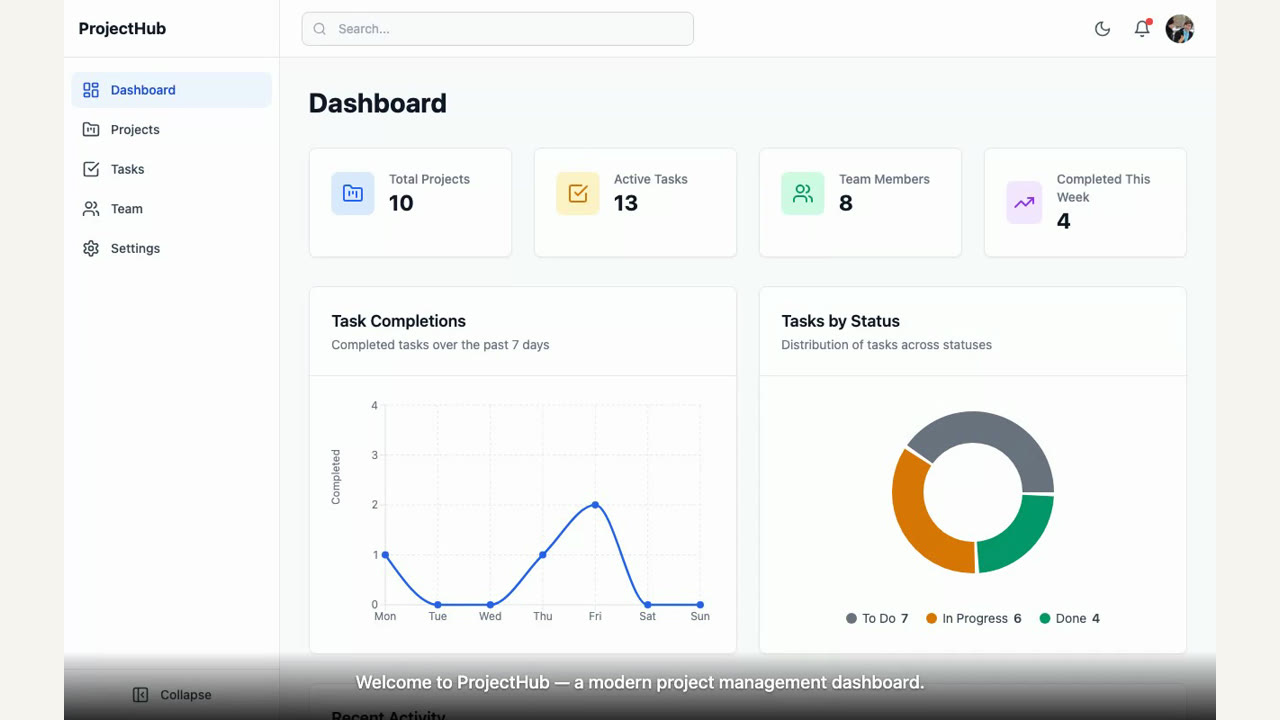
Have AI demo its own work back to you: Playwright scripts that click through the real app, a caption overlay injected right before each action, and a merge step that holds the video until each voice clip finishes. The code, and a lab for the freeze-frame rule.
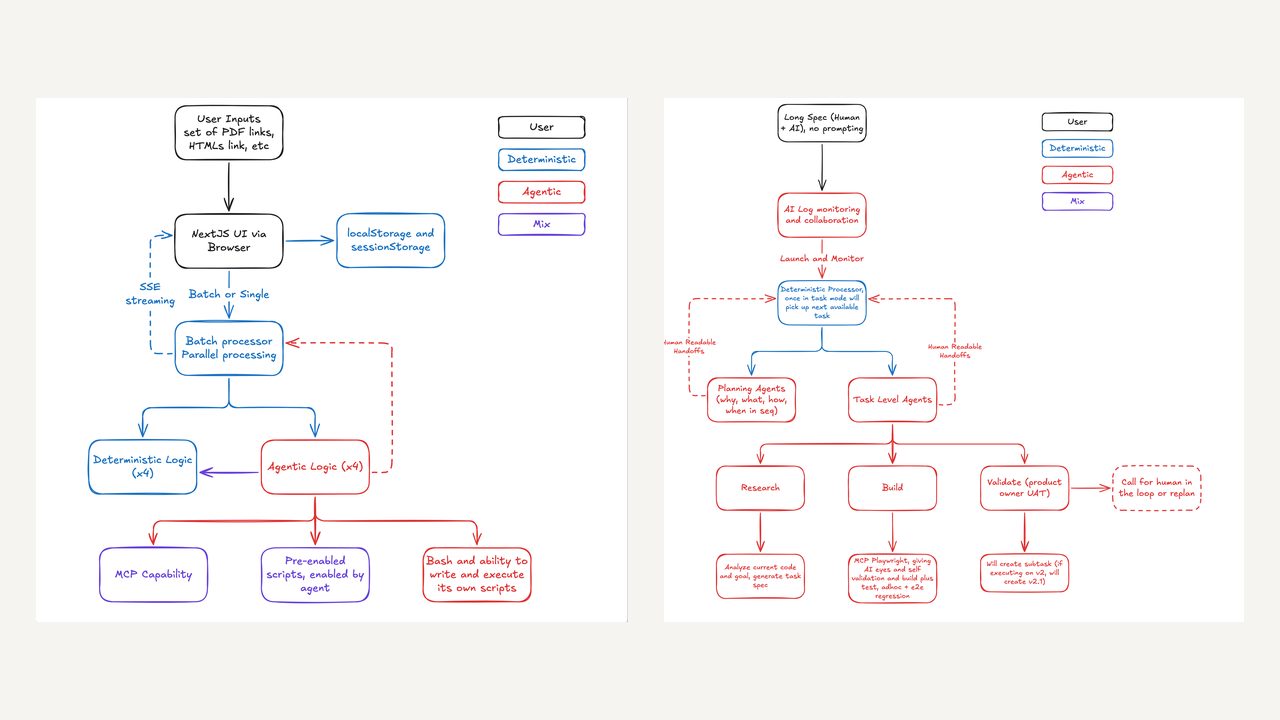
Let deterministic code set the order and hold the numbers, and let agents make the judgment calls. A Next.js evaluator that blends a scan with an agent's score 70/30, and a harness loop where a defect becomes a subtask, with the real scoring code and a model of the loop to play with.
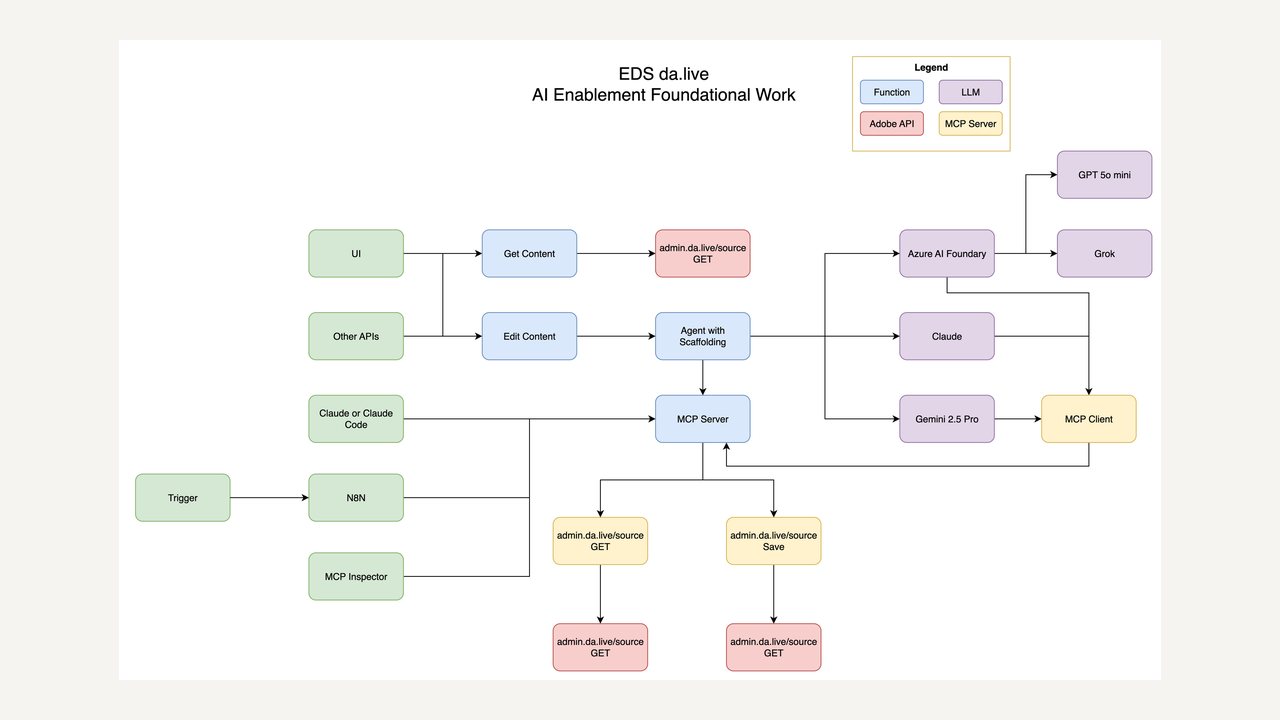
Part two: the same da.live MCP server on Claude, Gemini 2.5 Pro and Azure OpenAI, deployed to Azure Functions with OIDC and driven from n8n. Why each model client needs its own tool format, why serverless wants Streamable HTTP, and the two integration patterns to choose between.
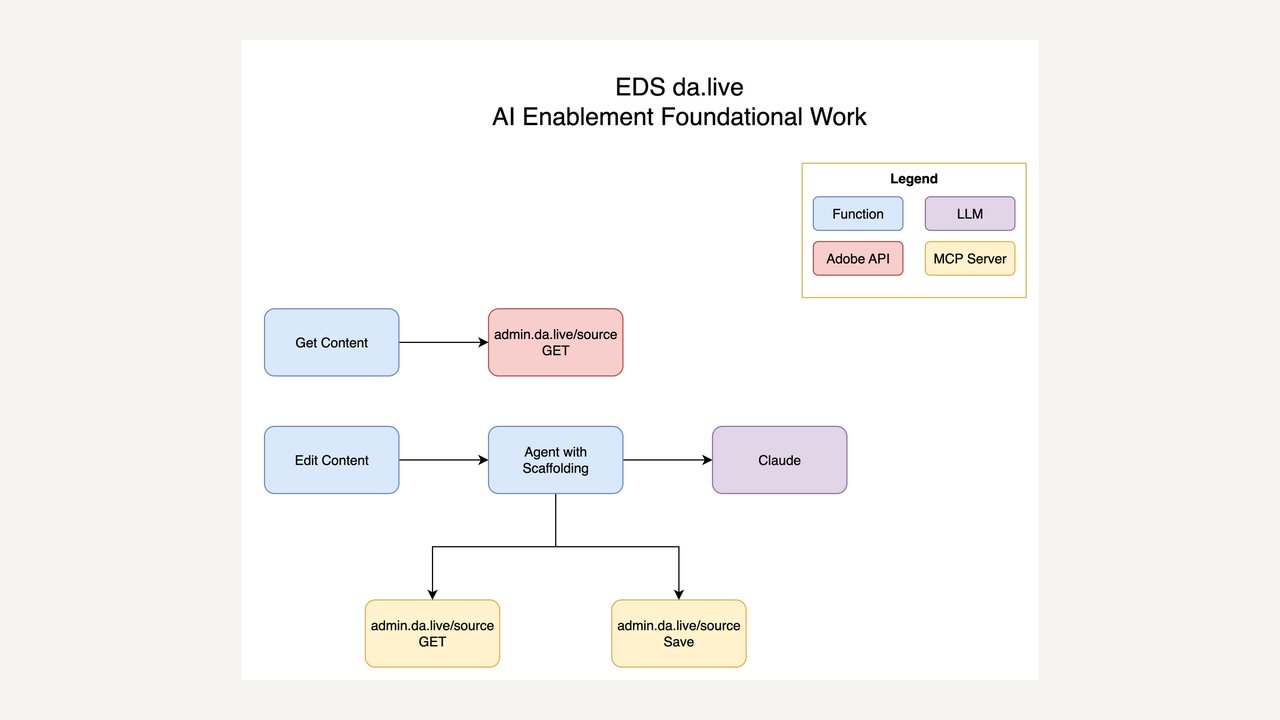
Two ways to let a model edit a da.live page: a scripted AI flow, and an MCP server with get and save tools the model calls itself. Same quality, twice the time and tokens, far more flexible. The code for both, and a side-by-side run of both versions.
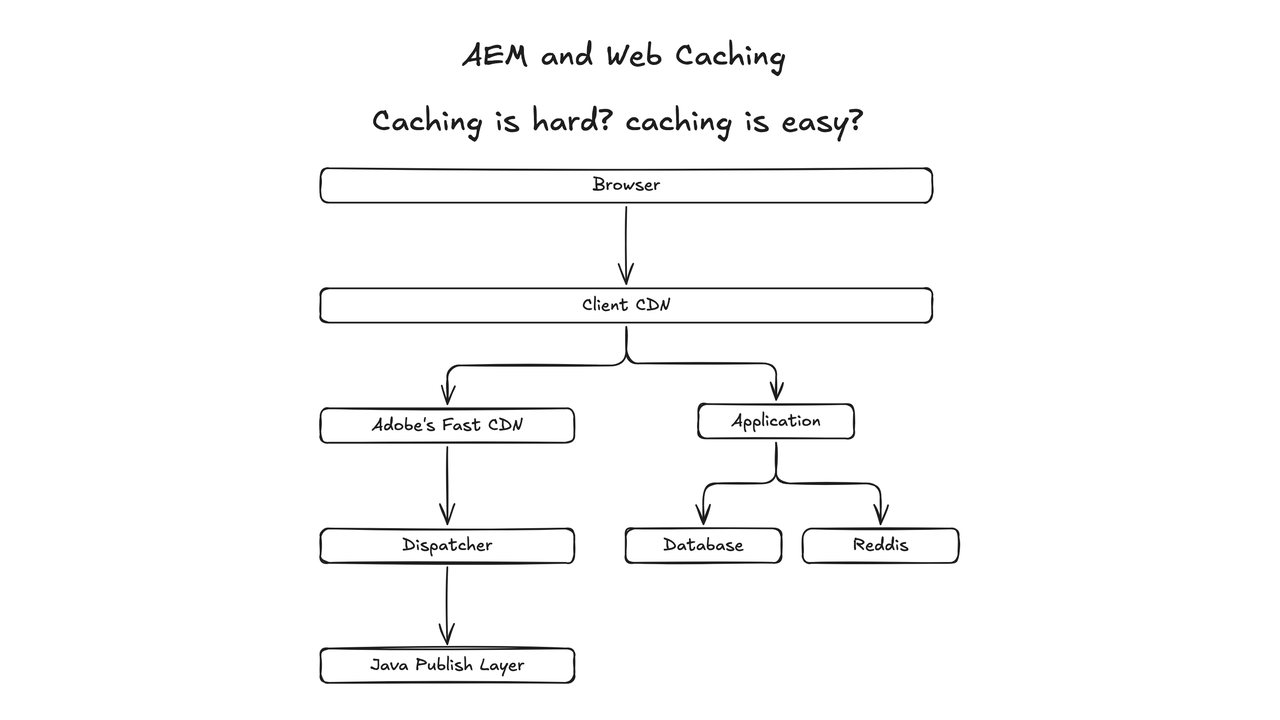
How Cache-Control moves from AEM publish through the dispatcher, Adobe's Fastly CDN and a client CDN to the browser, with a header relay you can switch layer by layer, a stale-while-revalidate timeline, and three tips for documenting and testing each layer.
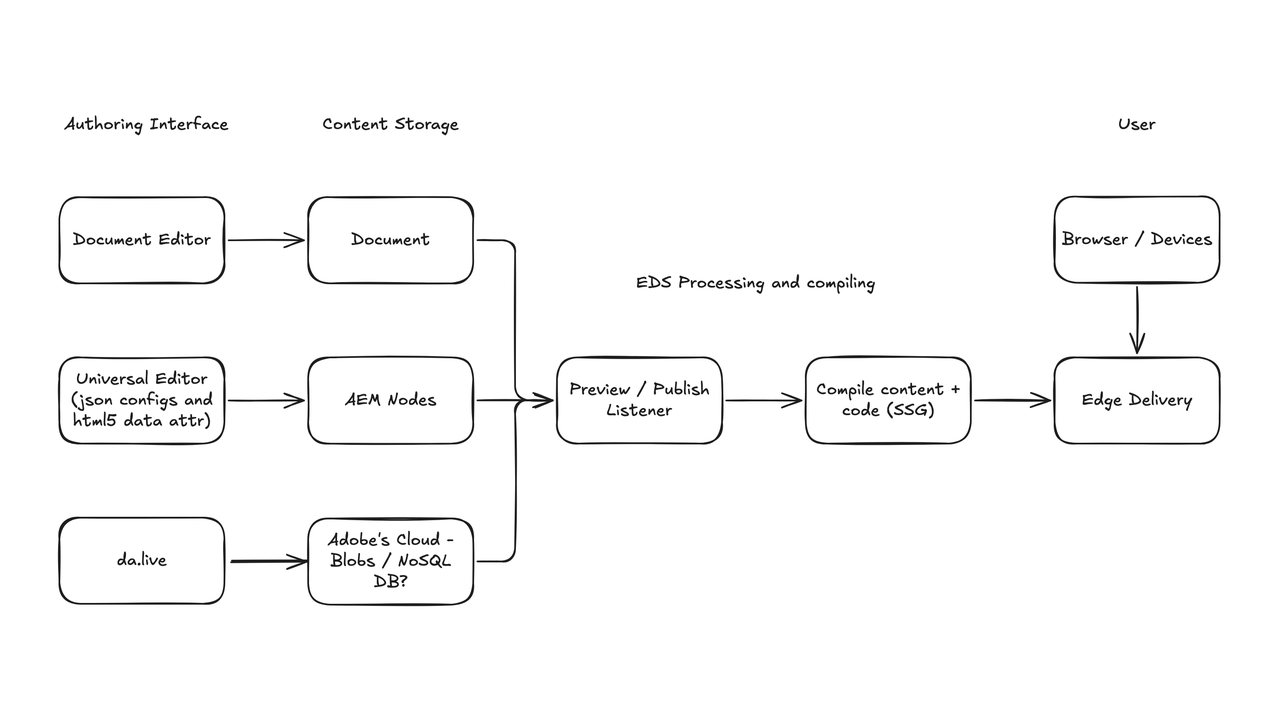
Documents, the Universal Editor and da.live on one diagram: the three Edge Delivery authoring options differ only in the editor and where content is stored. From preview and publish on, the path to the edge is shared.
Three fictional but realistic ways to get AEM content into email, mobile apps and sites: event topics, compile-time builds with Target, and one shared publish tier. Six considerations compared across all three diagrams, six more that never got a box, and the boards redrawn so they read on a phone.
How to make AI coding repeatable for a delivery team: the PRD, the technical blueprint and the MDC task file, the AGENTS.md rules that bind them, what stays the same as traditional delivery and what changes.
How an app written entirely by AI gets from a commit to the cloud: two GitHub Actions pipelines picked by branch name, five actors that each get into Azure their own way, a public copy on CloudFront and EC2, a layered Next.js architecture, and prompts kept as versioned JSON.
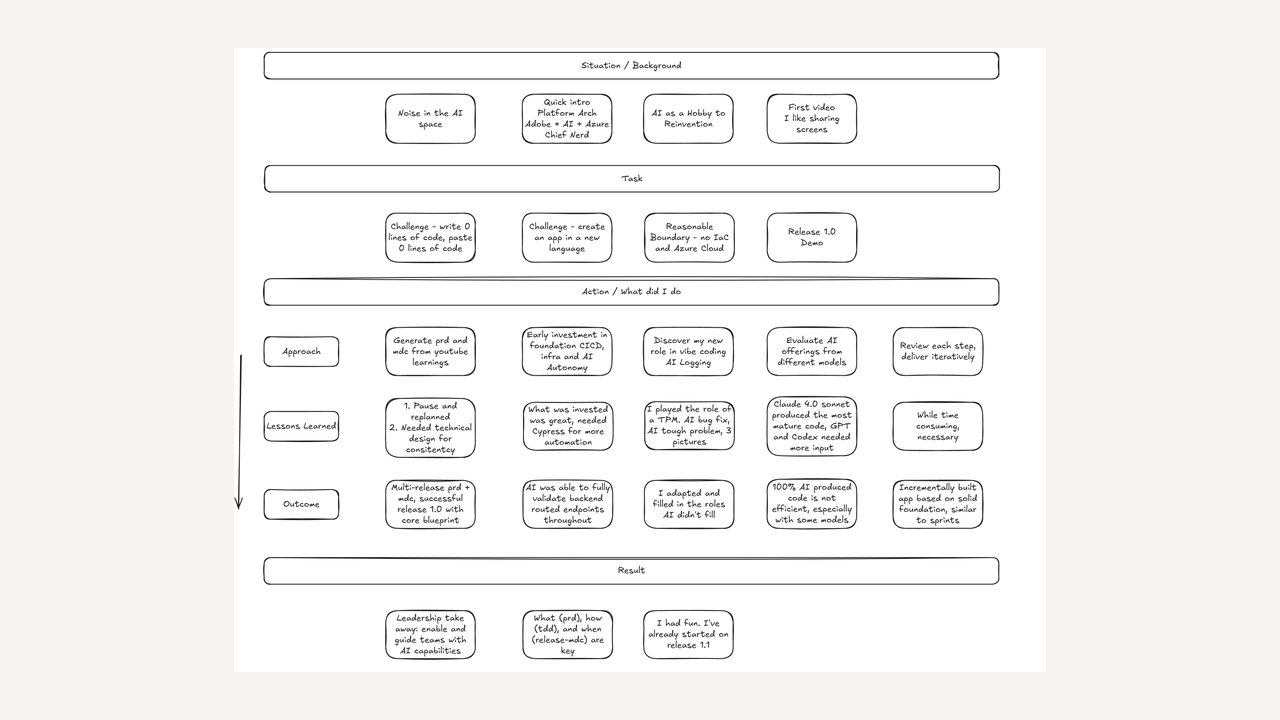
What it took to ship a Next.js AI agent written entirely by AI: what release 1.0 does, the four practices behind it (planning files the AI works from, early CI/CD with real cloud access, a person in the product manager seat, comparing models), where each fell short, and a lab that runs the real fix for a partial failure.
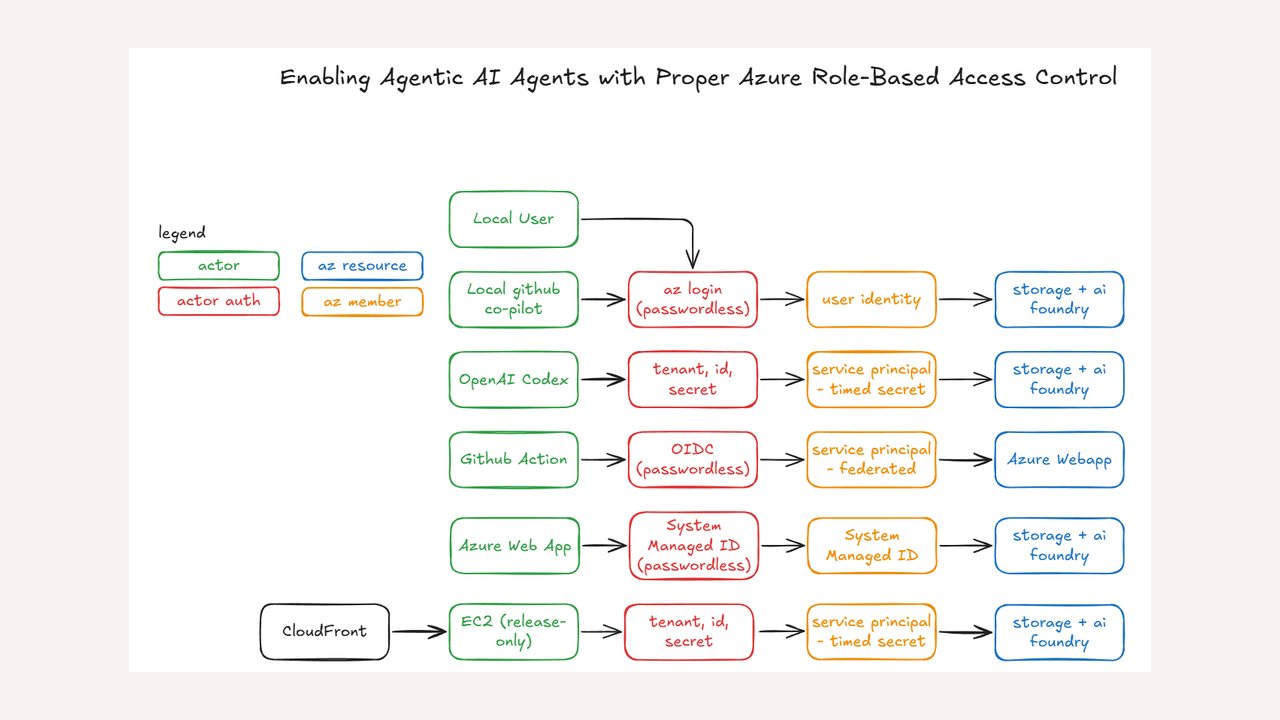
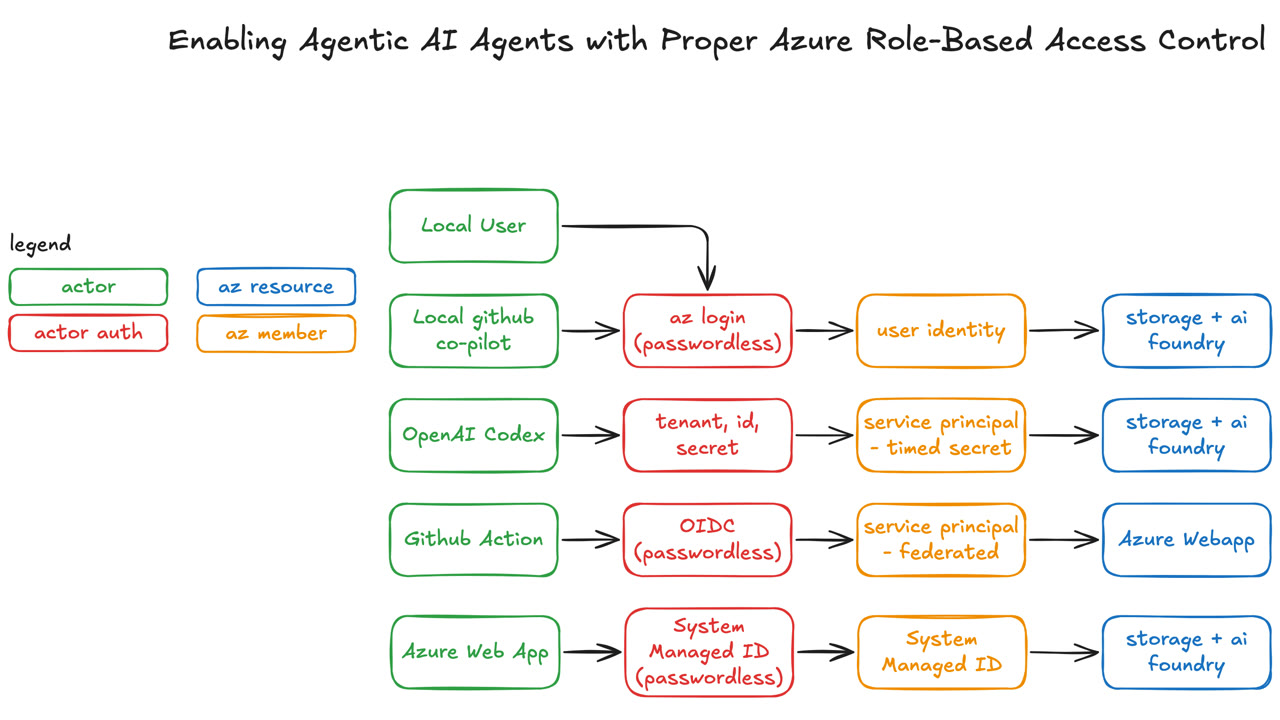
How I gave Copilot, Codex, GitHub Actions and an Azure Web App access to Azure Storage and AI Foundry with az login, managed identity, OIDC and one timed secret. Includes a lab that shows which credential DefaultAzureCredential picks.
Edge Delivery Services next to Cloudflare Pages, Netlify, Next.js, Hugo and Jekyll on five things enterprises need, plus how Adobe's CMS thinking got from CQ5 to EDS and the gaps EDS still had in June 2025.
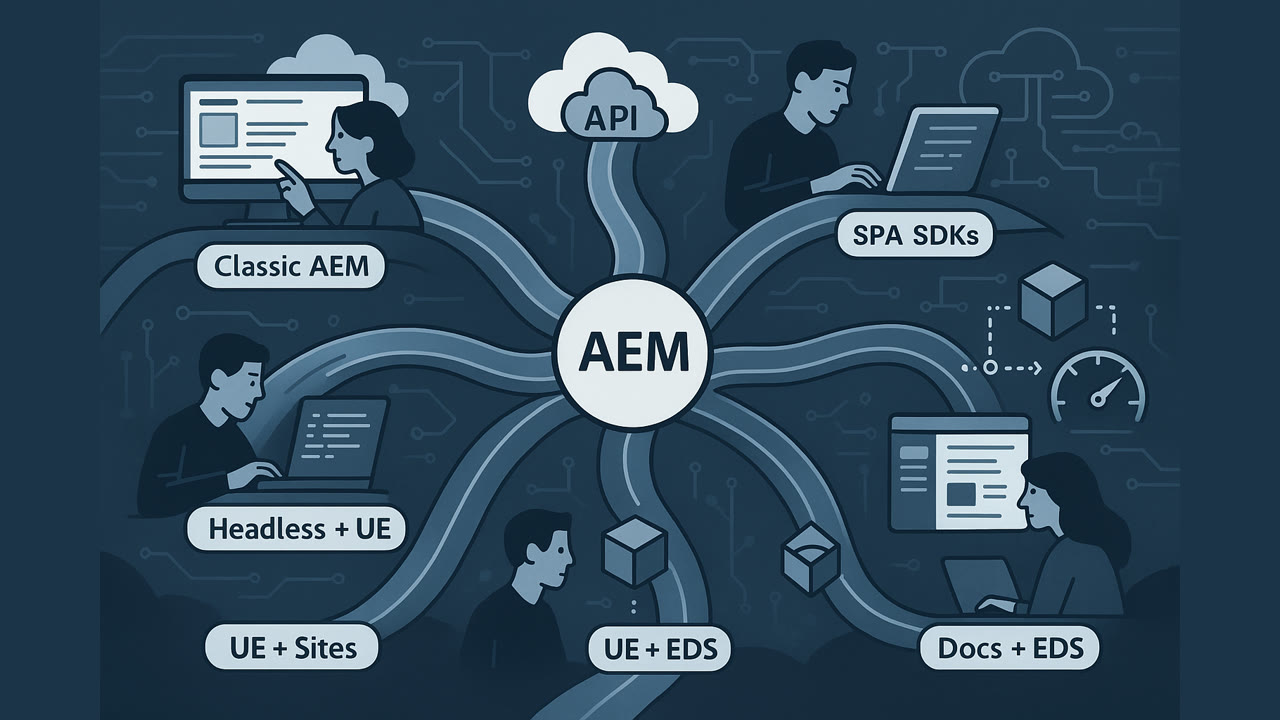
Seven ways to build on AEM side by side, from Classic AEM 6.5 to docs-based Edge Delivery: a functional and technical matrix with a compare-any-two tool, when Universal Editor beats the Sites Editor, and where each option fits.
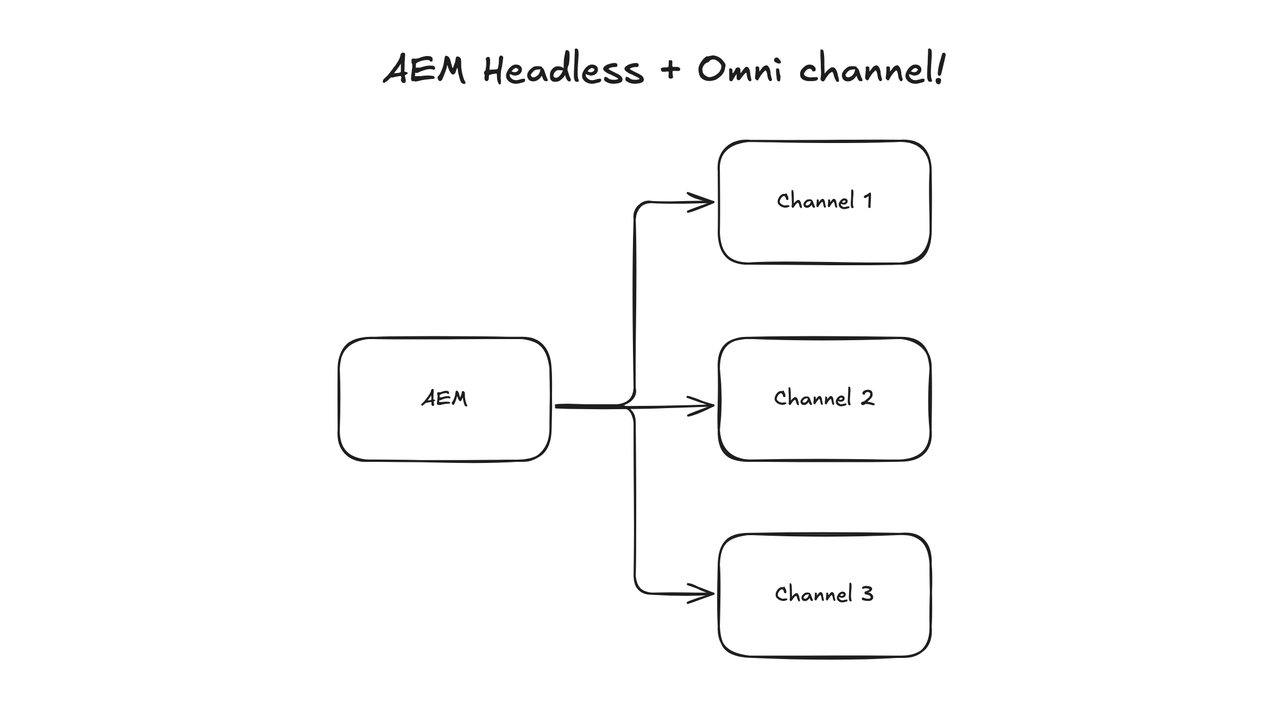
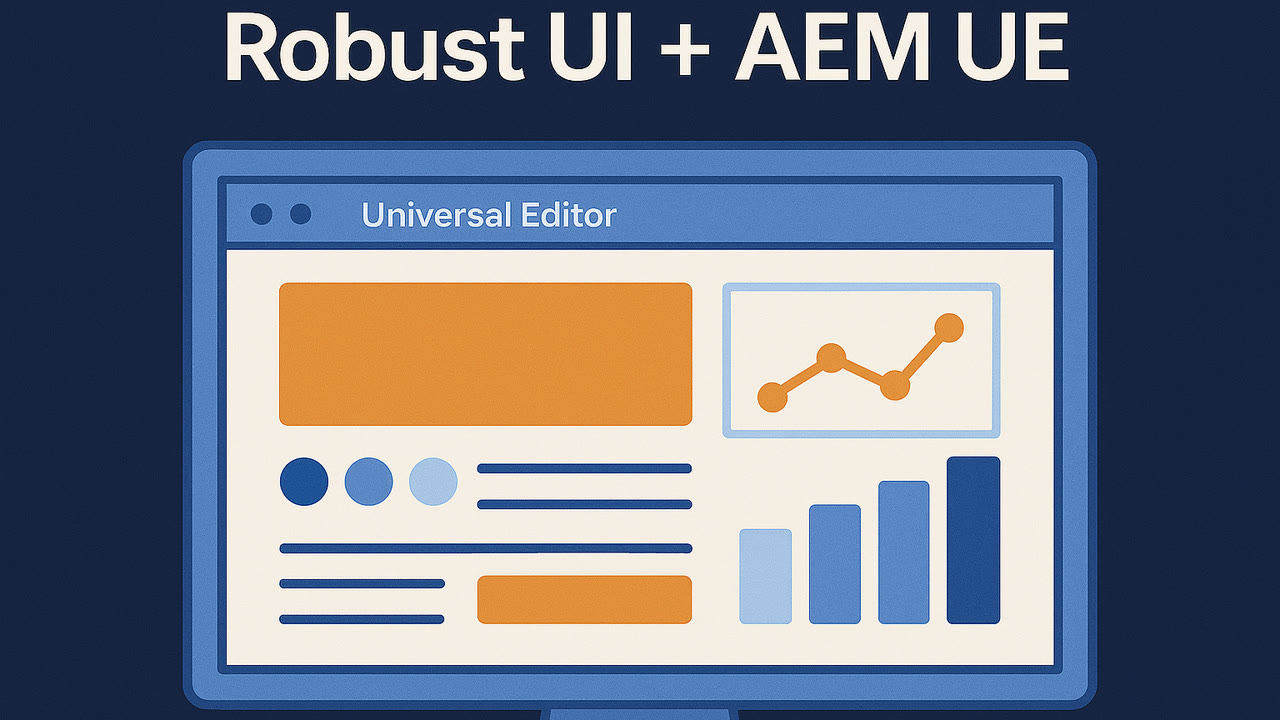
When a client's Next.js or Vue frontend came first, I think AEM headless with Universal Editor on top beats forcing classic Sites authoring. How I'd start, why persisted queries matter for caching, and when I wouldn't recommend it.
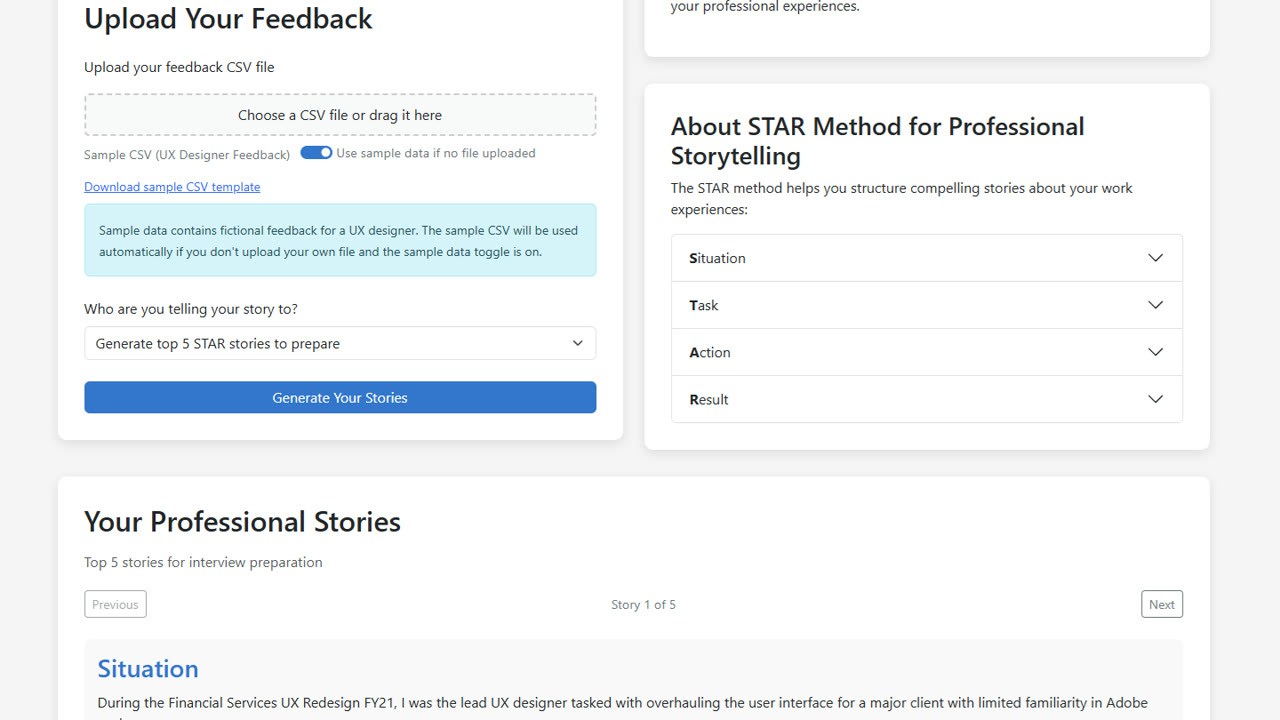
How a STAR story generator on Azure Functions prompts GPT-4o-mini for JSON, the parser that copes when the reply isn't clean JSON (with a lab you can break), the one reply that slips past validation, and how the five AI tools I vibe coded it with ranked in April 2025.
Most of these started on LinkedIn between April 2025 and September 2026. I've rewritten each one here in full, with the diagrams and the code, and noted what changed since. Where there is a video, it is on YouTube and embedded in the article.